How to Track Your Spending: Simple Methods That Actually Work
Updated on 2026-05-17 at 11:43
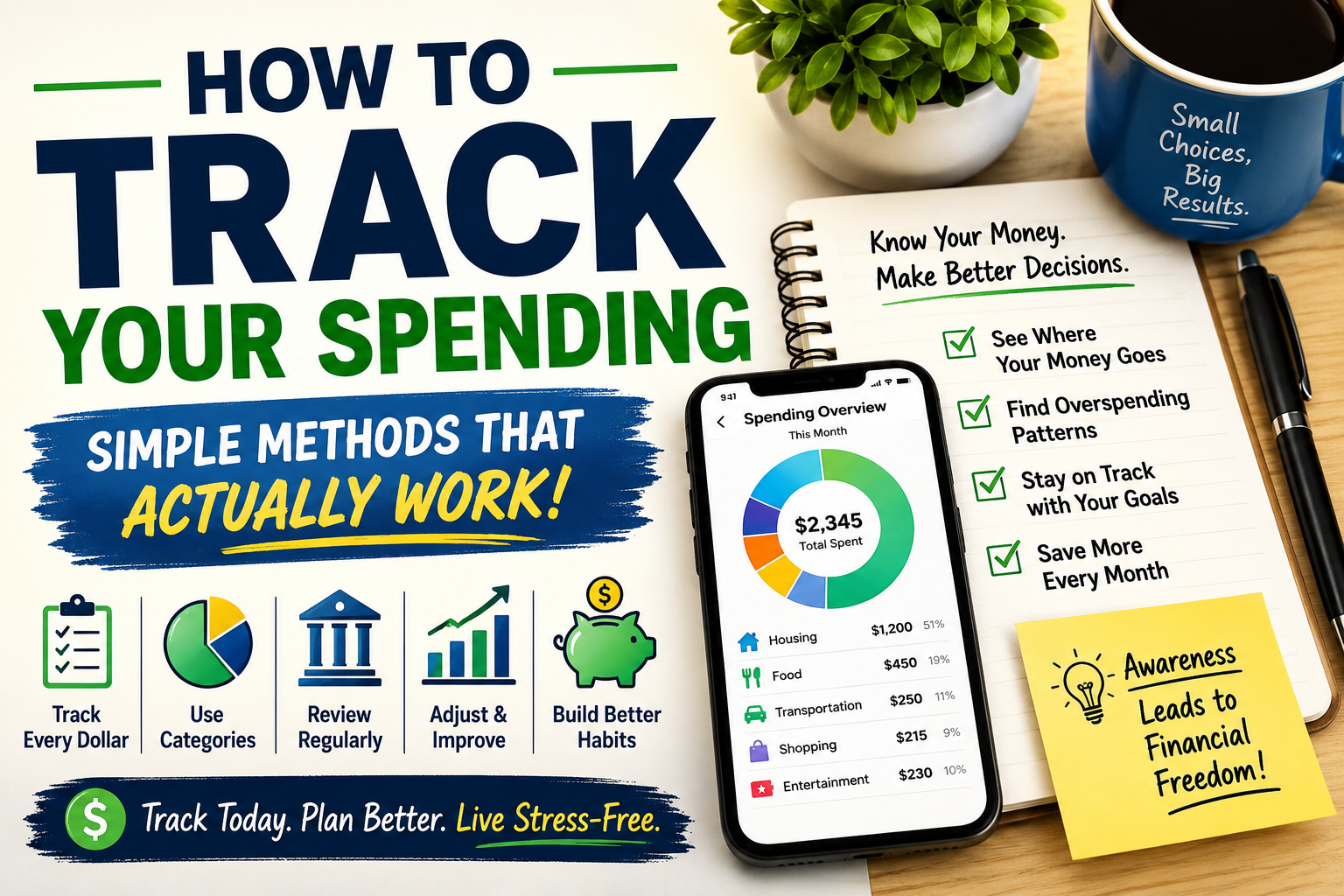
Creating a budget is important, but tracking your spending is what makes that budget useful.
A budget is your plan for where your money should go.
Spending tracking shows where your money actually went.
That difference matters.
Many people feel like they should have money left at the end of the month, but when they look closer, small purchases, subscriptions, dining out, and unplanned expenses quietly add up.
Tracking your spending helps you see those patterns clearly so you can make better decisions with your money.
What Does It Mean to Track Your Spending?
Tracking your spending means recording or reviewing where your money goes.
This can include:
• Bills
• Groceries
• Gas
• Dining out
• Subscriptions
• Shopping
• Savings
• Debt payments
The goal is not to judge every purchase.
The goal is to understand your habits.
Once you know where your money is going, it becomes much easier to adjust your budget and stay on track.
Why Tracking Spending Matters
Spending tracking gives you financial awareness.
Without it, budgeting often becomes guesswork.
For example:
You may think you spend $200 per month eating out, but after reviewing your transactions, you realize the real number is closer to $425.
That does not mean you failed.
It means you now have better information.
And better information leads to better decisions.
Benefits of Tracking Your Spending
Tracking expenses can help you:
✔ Find overspending patterns
✔ Build a more realistic budget
✔ Avoid surprise shortfalls
✔ Save more consistently
✔ Reduce financial stress
✔ Make progress toward financial goals
Even simple tracking can make a big difference.
Method 1: Use a Budgeting App
One of the easiest ways to track spending is by using a budgeting app.
A budgeting app can help you organize:
• Income
• Expenses
• Categories
• Balances
• Savings goals
This is helpful because everything is in one place.
Instead of trying to remember what you spent, you can review your budget regularly and see how your money is moving.
Example
If you create categories like:
• Housing
• Food
• Transportation
• Entertainment
• Savings
You can quickly see which areas are staying on track and which ones need attention.
This makes budgeting easier because you are not relying on memory.
Method 2: Review Your Bank Statements Weekly
If you do not want to track every purchase manually, start with a weekly bank review.
Once per week, look through your checking account and credit card activity.
Ask yourself:
• What did I spend money on?
• Did anything surprise me?
• Am I staying close to my budget?
• Do I need to adjust anything?
This can take as little as 10 minutes.
Example
You review your transactions and notice:
• Three fast food purchases
• Two subscription charges
• A higher-than-normal grocery trip
That gives you a chance to adjust before the month gets away from you.
Weekly reviews help you catch problems early.
Method 3: Use Spending Categories
Categories make spending easier to understand.
Instead of looking at one long list of transactions, group spending into sections.
Common budget categories include:
• Housing
• Utilities
• Food
• Transportation
• Insurance
• Debt payments
• Savings
• Entertainment
• Personal spending
• Miscellaneous
Categories help you answer one important question:
Where is my money going?
Example
You may not notice five small food purchases separately.
But when grouped together under “Dining Out,” you might realize you spent $180 that month.
That category view gives you clarity.
Method 4: Track Small Purchases
Small purchases are easy to ignore, but they can add up quickly.
Examples include:
• Coffee
• Snacks
• Delivery fees
• App purchases
• Convenience store stops
A $6 purchase may not seem important.
But if it happens five times per week:
$6 × 5 = $30 per week
$30 × 4 = $120 per month
That is why tracking small spending matters.
Method 5: Track Cash Spending Too
Cash can disappear quickly if you do not track it.
If you withdraw $100 and spend it throughout the week, it can be hard to remember where it went.
To track cash spending, you can:
• Keep receipts
• Use a notes app
• Record purchases at the end of the day
• Assign cash to specific categories
Example
If you withdraw $100 for personal spending, decide ahead of time what it is for.
That might include:
• $40 dining out
• $30 entertainment
• $30 personal spending
Now the cash has a purpose.
Method 6: Do a Weekly Money Check-In
A weekly money check-in is one of the simplest habits you can build.
Set aside 10–15 minutes once per week to review your money.
During your check-in:
• Review recent transactions
• Update your budget
• Check category balances
• Plan for upcoming bills
• Adjust spending if needed
This keeps your budget active instead of forgotten.
Common Spending Tracking Mistakes
Tracking your spending does not need to be complicated, but there are a few mistakes to avoid.
Mistake 1: Waiting Until the End of the Month
If you only review spending at the end of the month, it may be too late to adjust.
Weekly tracking gives you time to correct course.
Mistake 2: Using Too Many Categories
Too many categories can make budgeting overwhelming.
Instead of tracking every tiny detail, start simple.
For example:
• Food
• Bills
• Transportation
• Savings
• Personal spending
You can always add more later.
Mistake 3: Ignoring Small Purchases
Small purchases often explain why a budget feels off.
Do not ignore them just because they seem minor.
Mistake 4: Not Adjusting Your Budget
Tracking only helps if you use the information.
If one category is consistently over budget, adjust it or change your habits.
How Often Should You Track Spending?
For beginners, weekly tracking is usually the best balance.
Daily tracking can feel overwhelming.
Monthly tracking may be too late.
Weekly tracking gives you enough awareness without making budgeting feel like a chore.
Final Thoughts
Tracking your spending is not about guilt or restriction.
It is about awareness.
When you understand where your money goes, you can make better choices, build a more realistic budget, and feel more confident with your finances.
Start simple.
Review your spending once per week.
Use categories.
Pay attention to small purchases.
Adjust as needed.
That is how tracking becomes a habit that actually works.
Quick Takeaway
Tracking your spending helps you:
✔ Understand your habits
✔ Build a realistic budget
✔ Catch overspending early
✔ Save more consistently
✔ Reduce money stress
Small weekly reviews can lead to big financial progress.
Related Articles
-
 Fixed vs Variable Expenses Explained: A Beginner’s Guide to Smarter Budgeting
 -
 Budgeting is a simple plan for your money. Learn what budgeting is, why it matters, and how to start a realistic budget that helps you save more and s
 -
 Learn how to budget with a biweekly paycheck. Discover simple strategies to manage bills, handle 3-paycheck months, and stay in control of your financ
 -
 Struggling to stick to your budget? Learn 10 realistic, beginner-friendly tips to stay on track, avoid overspending, and build better money habits.