|
Key takeaways • Living paycheck to paycheck is mostly a timing problem: no buffer between money in and money out. • Find a small amount each paycheck first. $50 to $200 is a real start. • Build the buffer in stages: one week, half a paycheck, then a full paycheck. • Once you're a full paycheck ahead, each paycheck pays the next period's bills. • Protect the buffer with one rule: if you use it, refill it first. |
Living paycheck to paycheck means every dollar is spoken for before it arrives. Payday is a relief for about a day. Then you're waiting for the next one.
It's stressful, and it's common at every income level. More money helps, but it doesn't fix the pattern on its own. Plenty of people get a raise and find that their spending, and their stress, rise to meet it.
What breaks the cycle is a buffer: money that sits between your paycheck and your bills. This guide shows how to build one, a little at a time.
What getting "one paycheck ahead" means
Right now, your paycheck probably pays bills that are due this week. When you're one paycheck ahead, the money for this period's bills is already in your account before the paycheck lands. The new paycheck is set aside for the next period.
That small shift changes a lot:
• A late paycheck or a surprise bill doesn't cause a crisis.
• You stop paying bills late or juggling due dates.
• You stop needing overdraft coverage, payday loans or credit cards to bridge the gap.
• You can plan a whole period at once, instead of day by day.
Step 1: See your money by date
Most budgets are monthly totals. But living paycheck to paycheck is about when money moves, so you need dates.
Write down every paycheck and every bill for the next month, in date order, with a running balance. You'll see exactly where things get tight. Usually, it's the few days before each payday.
If you've never made a budget like this, start with how to budget by paycheck. It walks through assigning each bill to the paycheck that pays it.
Step 2: Find a little breathing room
You don't need to find hundreds of dollars. You need a small, steady amount you can set aside every paycheck.
Tasha is paid $2,100 on the 1st and the 15th. Her money was fully spent each period, so she went line by line looking for small changes she could actually keep.
|
Change |
Saved per paycheck |
How |
|
Eating out less |
$75 |
Cook two more dinners a week |
|
Subscriptions |
$25 |
Cancelled three she didn't use |
|
Car insurance |
$30 |
Got quotes and switched |
|
Grocery list |
$25 |
Shops once a week with a list |
|
Phone plan |
$20 |
Moved to a cheaper plan |
|
Total |
$175 |
$350 a month |
None of these hurt much. Together, they're $175 every paycheck. If your list is shorter, that's fine. $50 a paycheck is still a start.
Looking for places to start? Our guide to finding and cancelling forgotten subscriptions is an easy first win. Start with costs that change month to month, like food and shopping, since they're the easiest to adjust.
Step 3: Build the buffer in stages
A full paycheck can feel like a huge goal. So break it into stages, and celebrate each one.
1. Stage 1: A small cushion. Enough to cover a week of groceries and gas. This alone stops most "two days before payday" panics.
2. Stage 2: Half a paycheck. Now a surprise bill doesn't break the period.
3. Stage 3: A full paycheck. You're one paycheck ahead.

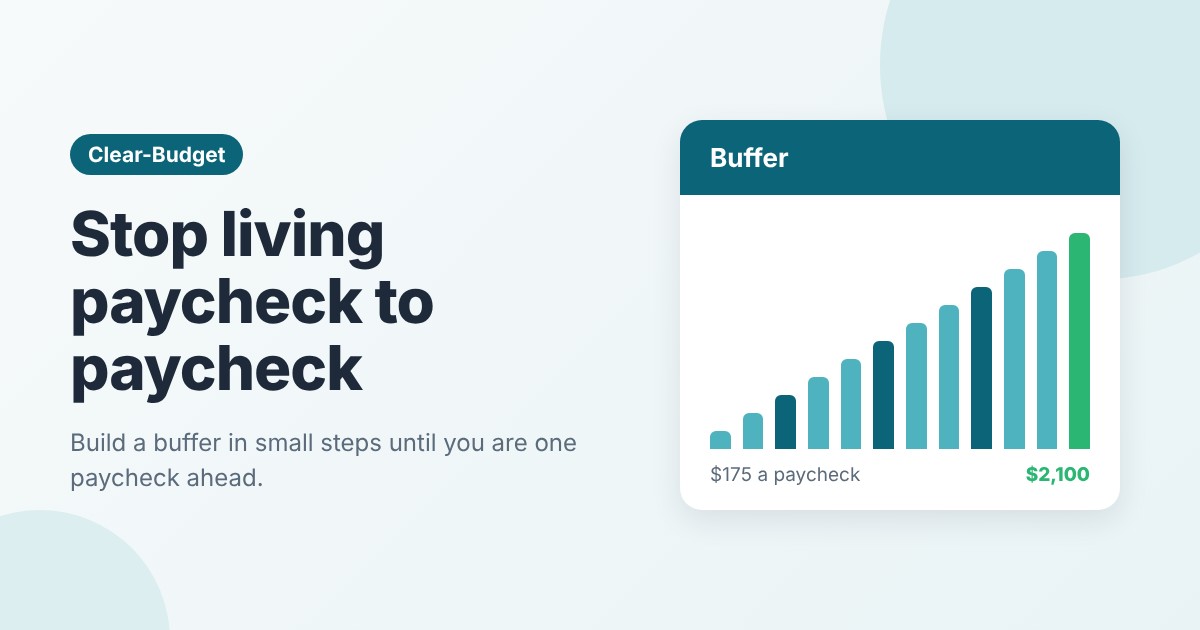
Tasha's buffer grows $175 each paycheck. She is one full paycheck ahead after 12 paychecks, or about six months.
At $175 a paycheck, Tasha reaches each stage like this:
|
Stage |
Buffer |
Paychecks |
About |
|
Small cushion |
$525 |
3 |
6 weeks |
|
Half a paycheck |
$1,050 |
6 |
3 months |
|
Full paycheck |
$2,100 |
12 |
6 months |
|
Then |
Emergency fund |
Ongoing |
Keep going |
Six months sounds long. But in six months, Tasha's whole relationship with payday changes.
Where to keep the buffer
Keep the buffer in checking or in a savings account at the same bank, where you can move it the same day. This isn't long-term savings. It's working money for timing.
Speed it up with one-time money
Any one-time money can jump you ahead a stage: a tax refund, a bonus, a gift, selling something you don't use. Put at least half of it straight into the buffer.
Step 4: Switch to paying from last period's money
Once your buffer equals one paycheck, make the switch. When a paycheck arrives, set it aside for the next period. Pay this period's bills from the buffer, which is really last period's paycheck.
From here on, every paycheck refills what you'll spend next. You're no longer waiting for payday to pay a bill that's already due.
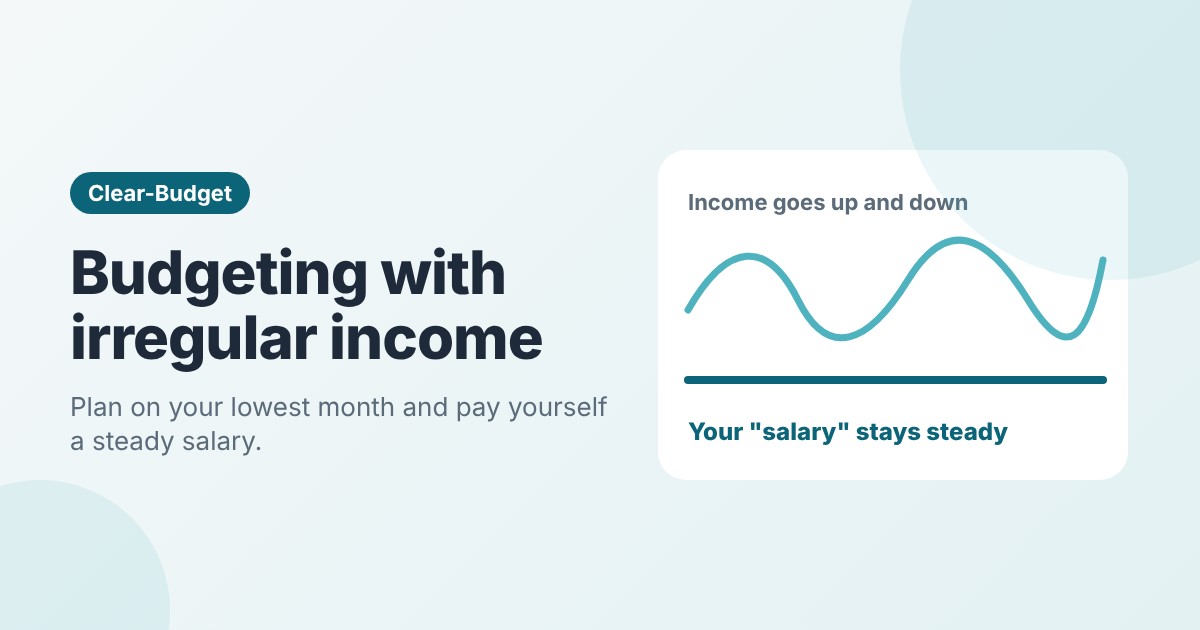
If your income changes from month to month, the same idea works with a holding account. Our guide on budgeting with irregular income explains it.
Step 5: Stop the leaks that drain the buffer
A buffer only helps if it stays full. Three things drain it most often:
• Irregular bills. Car registration, yearly renewals, holiday gifts. Set money aside for these each paycheck with sinking funds.
• New debt. Every new monthly payment comes straight out of your breathing room. Try not to add any while you build.
• Lifestyle creep. When things feel easier, it's tempting to spend the gap. Decide in advance where raises will go.
Talk to anyone you share money with
If you share bills with a partner or a roommate, building a buffer goes faster as a team. Agree on the goal, how much each of you puts in, and what counts as a reason to use it.
Without that talk, one person saves while the other spends the gap, and it feels like the buffer never grows. Our guide on how couples can budget together has simple ways to set this up, whether you combine your money or keep it separate.
Step 6: Protect it with one rule
Things will go wrong. A car repair, a medical bill, a short week. That's what the buffer is for, and using it is fine.
Just follow one rule: if you use the buffer, refill it before anything new. Go back to setting aside your amount each paycheck until it's full again.
After the buffer, keep the same habit going and build a full emergency fund. That's what protects you from bigger surprises, like a job loss.
How Clear-Budget can help
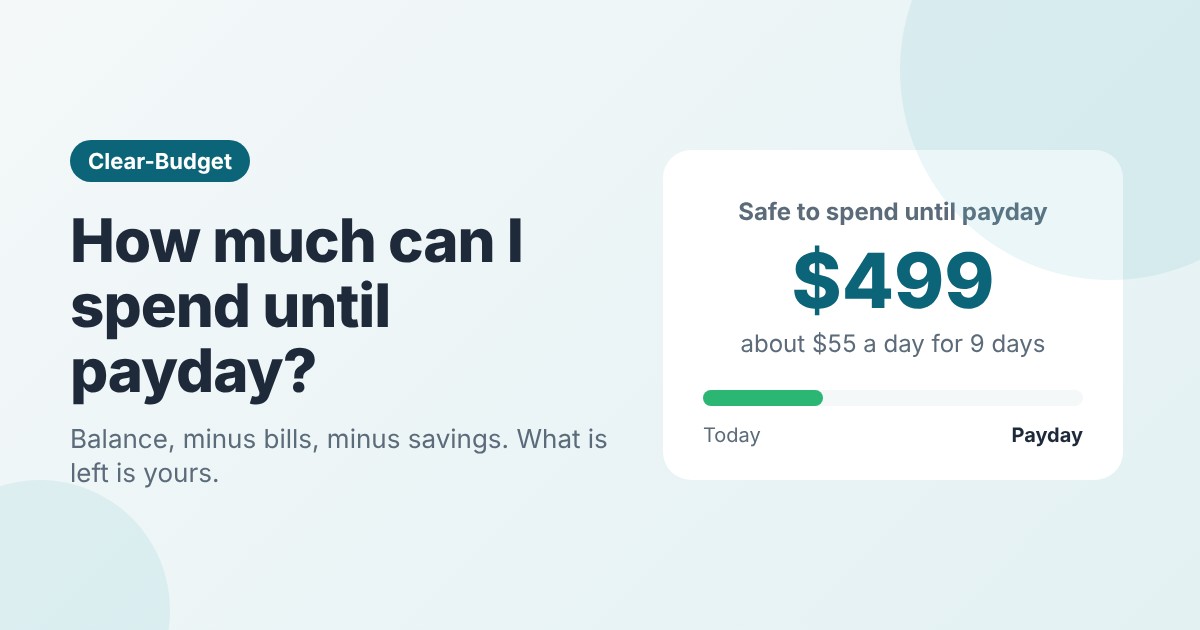
Clear-Budget lets you make a budget that runs from one payday to the next, with every bill on its due date and a running balance. You'll see your tightest day before it arrives, and a Safe to spend number shows how much is really free.
Add your buffer as a repeating item each payday so you never skip it. Use a savings bucket to track your progress toward one full paycheck. It's free, it works on your phone and the web, and you never link your bank.
FAQ
Can I stop living paycheck to paycheck on a low income?
Yes, though it will take longer. Start with whatever you can, even $20 a paycheck. A $100 cushion still stops some late fees and overdrafts, which frees up a little more.
Should I pay off debt or build a buffer first?
Build a small cushion first, then focus on debt. Without a cushion, any surprise goes on a card, and the debt grows back. Our debt snowball vs avalanche guide can help once you're ready.
Is a buffer the same as an emergency fund?
They're close cousins. The buffer handles timing: getting bills paid before payday. An emergency fund handles big surprises. Build the buffer first, then keep going.
What if my buffer keeps getting used?
That's a sign a cost is missing from your budget. Look at what you used it for. If it happens often, like car repairs, give it its own line.
This article is for general information only and is not financial advice.